| visit: www.infertilitytutorials.com |
|
Balanced Translocations
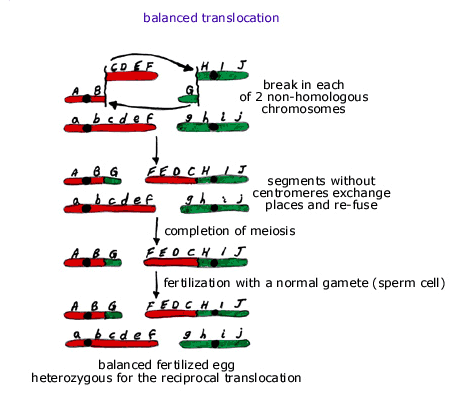
Chromosomal translocations are structural abnormalities that can occur when pieces (blocks) of two nonhomologous (different) chromosomes break and re-fuse, possibly to the “wrong” (nonhomologous) chromosome. In these situations, a piece of chromosome 9 may be attached to chromosome 18 (and visa versa). These chromosomal anomalies often involve a large number of genes and may result in numerous major developmental defects. If the exchange of chromosomal material is complete, with no (obvious) loss of genetic material, the translocation is “reciprocal” and balanced and the rearranged chromosomes may be transmitted through several generations without notice. The individual with a balanced translocation may have a normal appearance (since the total number and type of genes are normal) but may have reduced fertility or a chromosomally unbalanced offspring (often a lethal mutation resulting in spontaneous pregnancy loss, depending on the size of the region involved and the nature of the genes involved). | |||||||||||