During the past 20 years, Dr Eric Daiter has successfully helped thousands of couples that have suffered through the grief and emotional trauma of a pregnancy loss. If you have questions about miscarriage or you just want to find a compassionate infertility specialist to guide you, Dr Eric Daiter would be happy to help (in his Edison, NJ office or on the telephone). It is easy, just call us at 908 226 0250 to set up an appointment (leave a message with your name and number if we are unable to get to the phone and someone will call you back).
Availability
"I always try to be available for my patients since I do understand the pain and frustration associated with fertility problems or endometriosis."
Cost
"I understand that the economy is very tough and insurance companies do not cover a lot of the services that might help you. I always try to minimize your out of pocket cost while encouraging the most successful and effective treatments available."
Need help or have a question?
Robertsonian Translocations
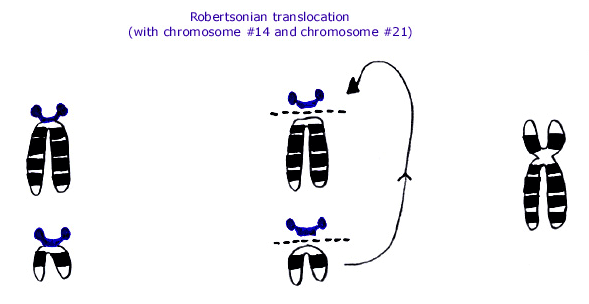
In Robertsonian translocations, the centromeres of two (homologous or nonhomologous) acrocentric chromosomes (chromosomes #13, 14, 15, 21 and 22, in which the centromeres are close to one end of the chromosome) appear to fuse to form a single chromosome containing the long arms of each of the reattached chromosomes. These individuals have a total of only 45 chromosomes rather than the normal 46 chromosomes per cell.
Loss of the small variable regions of these acrocentric chromosomes may not lead to detectable abnormalities, since they appear to contain few genes.
This illustration shows how a 14/21 Robertsonian translocation may occur.